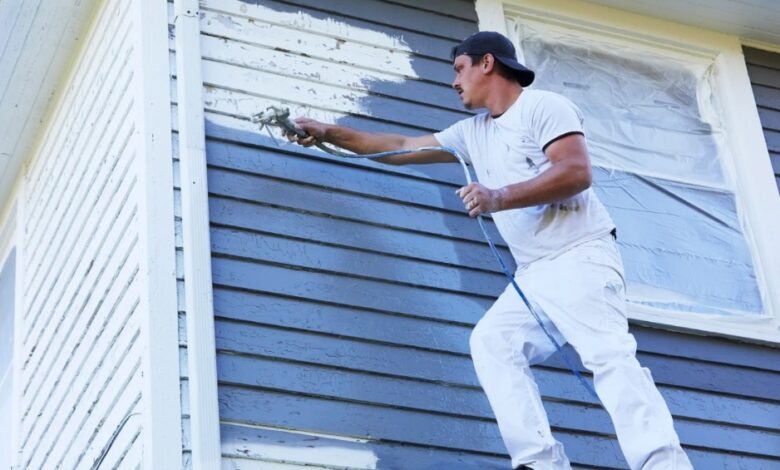
TL;DR: A quality exterior paint job can last 7 to 15 years when the surface is properly prepared and the right products are used. Paint applied over poorly prepared surfaces often begins to fail within 3 to 5 years. In Colorado, increased UV exposure, seasonal temperature changes, and moisture all affect how long exterior paint lasts. According to Remodeling Magazine’s 2023 Cost vs. Value Report, exterior painting also remains one of the home improvement projects that can improve curb appeal and recover a significant portion of its cost at resale.
The lifespan of an exterior paint job is determined long before the first coat of paint is applied. Surface preparation, substrate condition, product compatibility, and weather during application all influence how well the coating bonds and how long it continues to protect the home. Paint color, sheen, and brand still matter, but they cannot compensate for inadequate preparation or improper application.
Homeowners comparing Exterior Painting Contractors Westminster CO should look beyond paint brands and color selections. A contractor’s approach to cleaning, scraping, sanding, repairs, priming, and surface preparation has a greater impact on long-term performance than the finish coat alone. Orus Painting Solutions follows a preparation process designed to match manufacturer application requirements, helping homeowners understand that a durable paint job depends on the work completed before painting begins just as much as the paint itself.
The gap between a 5-year paint job and a 12-year paint job on the same house is almost entirely in the preparation, not the product.
What Surface Preparation Actually Means
Surface preparation is the work done before paint touches the wall. It includes pressure washing to remove dirt, chalk, and mildew. It includes scraping and sanding all areas where existing paint is peeling or flaking. It includes caulking gaps at trim joints, window frames, and penetrations. And it includes priming bare wood, repaired areas, and surfaces that adhesion testing shows are not holding properly.
Professional painting contractors spend 30 to 50% of the total project time on preparation. Homeowners doing their own prep or hiring contractors who rush this phase produce paint jobs that fail at the substrate-to-paint bond rather than from UV degradation.
A paint film that peels in sheets within two to three years has an adhesion failure. It did not fail because of the paint. It failed because the surface was not ready when the paint was applied.
What Colorado UV Exposure Does to Paint
Colorado receives approximately 300 sunny days per year. At Westminster’s elevation of approximately 5,260 feet, UV radiation is about 25% more intense than at sea level. UV breaks down the molecular bonds of both the paint pigment and the acrylic or alkyd binder that holds the pigment to the surface.
The result is fading, chalking (a powdery residue on the surface), and binder breakdown that produces cracking and brittleness. South and west-facing walls receive the most UV exposure and fail years before north and east-facing walls on the same structure.
Purchasing a paint with documented UV stabilizers in the product data sheet extends the period before fading becomes visible. Sherwin-Williams Duration Exterior and Benjamin Moore Aura Exterior both list UV-stabilizing additives as documented product features and are the products that appear most consistently in professional contractor specifications for Colorado exterior projects.
What Product Quality Difference Is Actually Worth Paying For?
The price difference between a budget exterior paint and a premium product is $15 to $40 per gallon. On a typical home requiring 15 to 20 gallons, that range is $225 to $800 more for the premium product.
The difference in performance is documented in accelerated weathering tests conducted by the manufacturers and independently evaluated by Consumer Reports. Premium 100% acrylic formulas with higher solids content build more film per coat, resist UV longer, and maintain adhesion through more freeze-thaw cycles than entry-level products.
If the premium paint extends the repaint cycle by 4 to 5 years, and a full exterior repaint costs $4,000 to $8,000 in labor and materials, the $800 in additional product cost avoided one repaint cycle. That is a straightforward financial calculation.
What Finish Level Lasts Longest on Each Surface?
Satin finish is the standard for most exterior wall applications. It is durable enough to clean, flexible enough to accommodate thermal movement without cracking, and provides enough sheen to resist moisture without the hyperreflectivity that shows surface imperfections.
Semi-gloss belongs on trim, doors, and window frames where durability and cleanability matter more than hiding surface variations. Flat exterior paint belongs on rough-textured stucco or masonry where surface irregularities would be highlighted by any sheen.
Matching the finish to the surface function adds years to the specific surface’s service life compared to applying one sheen across the entire exterior.
What Triggers an Early Repaint?
Four conditions signal that a repaint is needed before the expected cycle completes.
Chalking is the first. When you run your hand across the painted surface and come away with a powdery residue, the binder has broken down. The existing paint cannot serve as a primer for a new coat because it has no adhesive integrity.
Peeling in sections means adhesion has failed. New paint applied over peeling old paint will peel in the same areas within one to two seasons.
Visible mildew staining that does not clean off with standard bleach solution indicates biological growth that has penetrated the paint film. New paint over active mildew produces the same staining within one season.
Caulk failure at joints and window frames, visible as gaps or cracked caulk, allows water infiltration that destroys the substrate and produces blistering and peeling in those areas.
Key Takeaways
- Colorado’s 300-plus sunny days and elevation-amplified UV intensity degrade exterior paint 25% faster on south and west-facing walls compared to identical products in lower-elevation, less-sunny climates
- The gap between a 5-year paint job and a 12-year paint job is almost entirely in surface preparation, not product quality; adhesion failure from inadequate prep produces peeling within two to three years
- Premium 100% acrylic exterior paint costs $15 to $40 more per gallon than budget alternatives; on a 15-gallon project, that $225 to $800 premium typically delays the next repaint cycle by 4 to 5 years
- Remodeling Magazine’s 2023 Cost vs. Value Report found exterior paint returns 68 cents per dollar at resale, making it one of the more financially defensible home improvement investments
- Chalking, peeling sections, active mildew penetration, and failed caulk are the four conditions that signal a repaint is needed, regardless of how many years have passed since the last job
- Satin finish on walls and semi-gloss on trim is the combination that produces the longest service life per application for most Colorado exterior wood and fiber cement surfaces
Paint lifespan is predictable when the preparation and product decisions are made with the right information. The surprises that produce a three-year repaint instead of a twelve-year one are almost always avoidable with the right process from the start.